
Who are Toritetsu? Japan’s Most Talked About Fandom

Who are Toritetsu? Japan’s Most Talked About Fandom
December 8, 2025
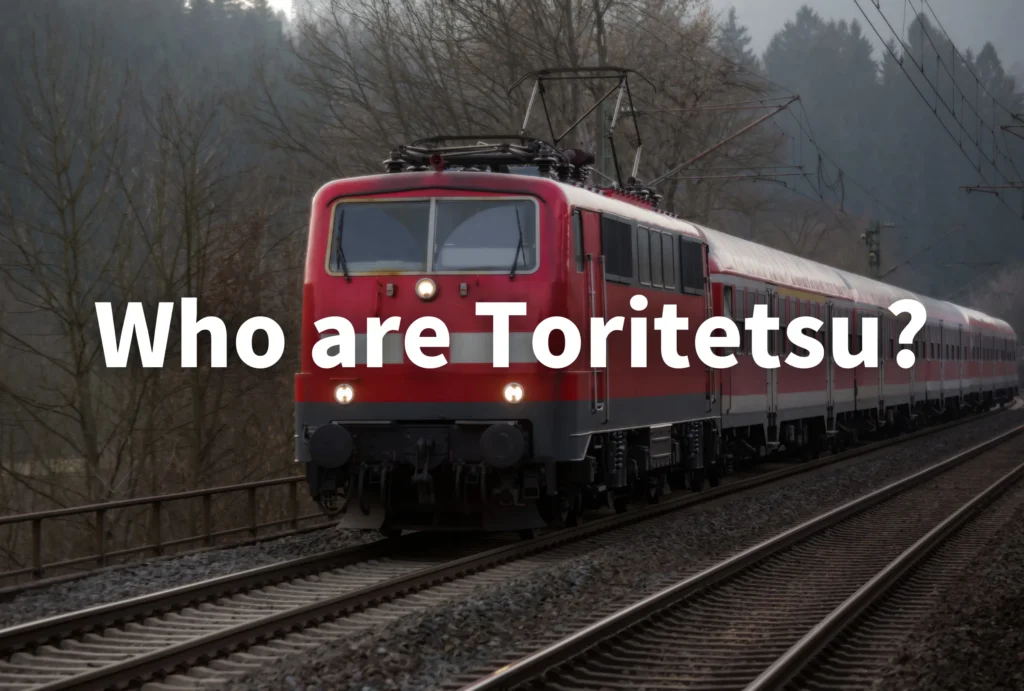
Japan is a land of fandoms. Anime, video games, cosplay, fashion—the list goes on. Fandoms are everywhere in Japan, and you’re likely part of one, even if you don’t realize it. You probably even know the word for someone who participates in a fandom: “Otaku,” referring originally to the residence a fanatic might hole up in, their “お宅,” to focus on their hobby. But in recent years, there’s one that’s been causing a buzz on social media: “Toritetsu.” Yes, of all the ones to cause a stir, it’s the one perhaps most uniquely Japanese, the “train otaku“, that people have been talking about. Why though? An infatuation with trains is nothing so controversial, you might say. Well, normally I’d agree, but the circumstances dictate I elaborate, so tonight we’ll be going over what Toritetsu are, what they’re so focused on, why people are talking about them, and where the future of this Japanese train photography fandom is going.
What are Toritetsu?
“Toritetsu” (撮り鉄) refers to a specific subset of train otaku who are devoted to taking photos of trains. Simple enough, right? “Tori,” in this context, means “to take (a photo),” and “Tetsu” refers to the trains themselves, literally meaning “train photographer”. It’s pretty easy to identify them by the large, professional-grade cameras they carry, often with telephoto lenses capable of capturing trains at high speeds. Not to be confused with “Noritetsu” (乗り鉄), who are train otaku focused on riding trains, though there’s nothing saying you can’t be both.
Because trains move fast, these cameras need to be capable of taking multiple high-quality shots in rapid succession, making them expensive and fragile, like those you’d see for a high-end photoshoot or sports photography. Everything is defined by the quality of the photos taken, and serious Toritetsu will wait hours for just the single perfect frame. It’s not uncommon to see dozens of Japanese train photographers lined up at popular spots, all competing for the same shot during a train’s “golden hour” pass.
Why are they a thing?
It might seem odd to fixate on trains, but if there’s one country where it makes sense, it’s Japan. Japan’s railways are exceptional by international standards. They have extreme variation, impeccable maintenance, and aesthetic qualities to boot. This means they just tend to be visually striking subjects. You have everything from vintage steam locomotives and retro designs to high-tech bullet trains like the Shinkansen series, or distinctive private railway designs like the Odakyu Romancecar and the elegant Kintetsu Limited Express.
Adding to this variety is how rolling stock is frequently updated or retired, with entire train models being phased out every few years. This means “last runs” (sayonara unten, さよなら運転) are very common, creating scarcity value that fans take seriously. When a beloved train model makes its final journey, hundreds of Toritetsu might gather for that one perfect farewell shot. With the internet making schedules easy to research and share, it’s no wonder why there are dense networks (and crowds) of individual Toritetsu each trying to capture the best angle. With the relatively limited space that station platforms and railway crossings allow, it’s sort of inevitable that problems would arise.
Why are they considered a nuisance?
Toritetsu have a less-than-stellar reputation these days, and not without reason. There’s a variety of documented incidents—trespassing on tracks (very dangerous!), blocking public roads to get shots, crowding or monopolizing platforms, and even cutting down trees or vegetation that “ruin” their compositions. There have been cases where Toritetsu have verbally harassed bystanders, left trash at photography spots, or posted threats online toward people who accidentally photobombed their pictures.
Consider the example of Enoden Bicycle Bro (江ノ電自転車ニキ), probably the most well-known (and memed) Toritetsu incident. On August 5, 2021, while Enoshima Electric Railways was doing a test run of one of their new trains, an anonymous man (subsequently dubbed Enoden Bicycle Bro) began casually riding alongside it, hand outstretched in a carefree gesture—completely unaware he was ruining the shot for dozens of eager Toritetsu who had staked out the route. They began hurling abuse at him in the moment, and later escalated to giving his pizza shop negative reviews online and even making threats, sparking a nationwide debate on the behavior of enthusiastic train fans. Though both sides eventually apologized (with Bro’s shop ironically gaining popularity from the publicity!), the fact that such an incident became national news and produced countless memes speaks volumes about how the average person regards Toritetsu behavior.
Other notorious incidents include Toritetsu who’ve been arrested for trespassing on active rail lines, groups who’ve blocked emergency vehicles to preserve their camera positions, and photographers who’ve harassed railway staff for not accommodating their shooting schedules. It’s sort of no wonder that they have such infamy.
What’s the future?
Despite everything, Toritetsu are probably here to stay – and that’s not necessarily a bad thing. After all, there have been efforts by major train companies to accommodate responsible enthusiasts. For example, Sagami Railway partnered with Adobe in December 2023 to host a workshop teaching Toritetsu how to use AI tools to remove unwanted objects from their photos (rather than harassing real people or damaging property).
This isn’t to say it’s only carrot with no stick, though. Stronger enforcement methods for safety and public order are also being implemented, such as no-photography zones, fines for trespassing, and increased security at popular spots during major railway events.
With social media being what it is, viral incidents will continue to shape public perception, making it harder for people to just forgive and forget. Japan is a nation where, above all, community and the bonds that tie people together matter deeply. Unfortunately, whether from a lack of social awareness or consideration for others, the people on the other side of the camera lens are too often forgotten and ignored in the pursuit of that perfect shot.
If this community is to shed its unfortunate reputation, it needs to relearn how to approach others in the spirit of mutual care and respect, so that the incidents of the past can stay there, and the hobby can be enjoyed by everyone without conflict.
Conclusion
Toritetsu are a uniquely Japanese phenomenon. They’re passionate train photographers chasing the perfect shot of Japan’s diverse railways. From vintage locomotives to sleek Shinkansen, there’s no shortage of captivating subjects. The problem isn’t the hobby itself, but what happens when that passion tramples over common courtesy and public safety. The Enoden Bicycle Bro incident and countless others show the reputation damage that follows.
Still, there’s hope. Railway companies are meeting enthusiasts halfway with designated spots and workshops, while cracking down on dangerous behavior. If the Toritetsu community can remember that other people deserve respect too, this hobby can thrive without the infamy. After all, the best shot in the world doesn’t have to come at the cost of other people’s feelings.
If you liked this article,
give it a like!



-

"Beyond Tsukiji!? The Grilled Fish Delight at Shinpachi Shokudo
No need to travel all the way to Tsukiji or...
-

Halloween in Shibuya: What to Know, What to Avoid, and How to Enjoy It
You’ve heard of it. We’ve heard of it. Everyone has...
-
Washing Money
1. Have You Ever Tried Washing Money at a Shrine?...
-

Tokyo Comes Alive in June! Don’t Miss These 5 Matsuri
1. Torigoe Matsuri Dates: June 7-9, 2025Admission: FreeExperience Tokyo’s most...
-

Toyosu Market – The New Food Capital of Tokyo
Toyosu Market is Tokyo’s new central wholesale market, relocated from...

-
Washing Money
1. Have You Ever Tried Washing Money at a Shrine?...
-
Toyosu Market – The New Food Capital of Tokyo
Toyosu Market is Tokyo’s new central wholesale market, relocated from...
-

Food Culture and Specialties at Tsukiji Market!
Tsukiji, known as Tokyo’s good culture center, is a treasure...
-

5 Unique Museums That You Can Find in Tokyo
Tokyo is home to some of the most prestigious museums...
-

5 Things to Watch Out For When Visiting Japan in the Summer
Japan is well-known for its four seasons. Spring is pleasant...